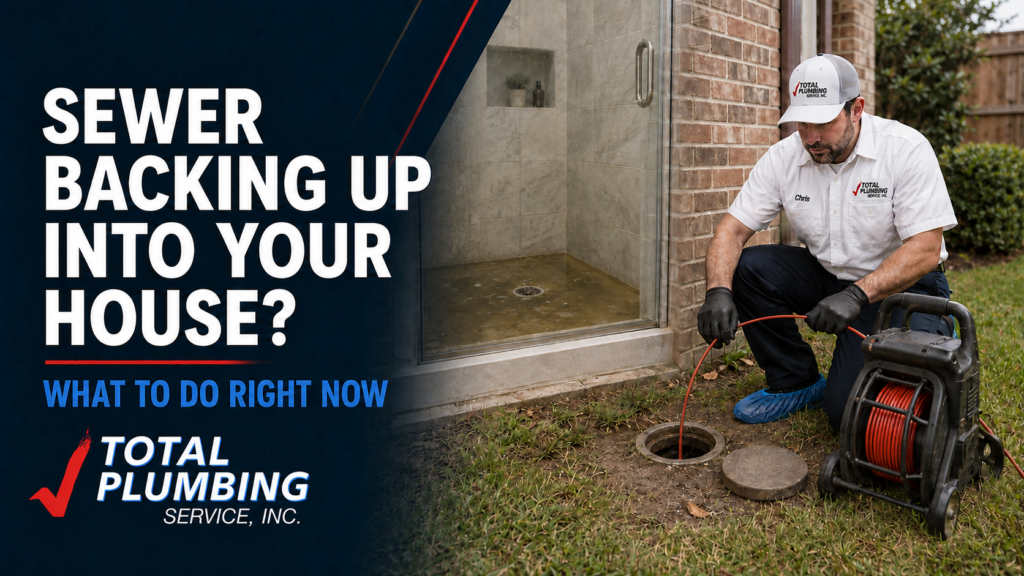
Sewer Backing Up Into Your House? What to Do Right Now
Seeing dirty water or sewage coming up through a toilet, bathtub, shower or floor drain is more than an unpleasant plumbing problem. A sewer backup can expose your household to contaminated water, damage floors and walls, and indicate a blockage or failure somewhere in your main sewer line.
If your sewer is backing up into your house, stop using the plumbing system and act quickly. Continuing to flush toilets or run water can send even more wastewater into your home.
Here is what North Texas homeowners should do immediately, what may have caused the backup and when it is time to call a plumber.
1. Stop Using Water Throughout the House
Do not flush toilets, run faucets, take showers or use appliances that discharge water, including your washing machine and dishwasher.
When the main sewer line is blocked, wastewater cannot flow away from your house normally. Every additional gallon sent down a drain can contribute to the backup.
Tell everyone in the home to stop using the plumbing until the problem has been inspected.
2. Keep People and Pets Away From the Affected Area
Sewage can contain bacteria and other contaminants. Keep children and pets out of rooms affected by the backup and avoid direct contact with the water.
Do not walk through sewage-contaminated water unless it is absolutely necessary. If you must enter the area, use appropriate protective equipment such as waterproof boots and gloves.
3. Watch for Electrical Hazards
If wastewater is near electrical outlets, appliances, extension cords or your electrical panel, do not enter the area.
Shut off power to the affected space only if you can reach the breaker safely without crossing standing water. If you are uncertain, stay out of the area and contact an appropriate professional.
4. Check Which Fixtures Are Backing Up
Without running additional water, note where the backup is appearing.
A problem affecting one sink or toilet may be an isolated fixture clog. A main sewer line problem is more likely when:
- Multiple drains are slow or clogged at the same time
- Flushing a toilet causes water to rise in a bathtub or shower
- A toilet bubbles when another fixture is used
- Sewage appears in the lowest drain in the home
- Water comes out of an exterior sewer cleanout
- Several fixtures produce gurgling sounds
- A strong sewer odor is present inside the home
Share these details with your plumber. They can help determine whether the problem is isolated to one fixture or affecting the main sewer line.
5. Call a Plumber for the Sewer Backup
A main sewer backup generally cannot be solved with a household plunger or chemical drain cleaner. It requires professional equipment to locate the obstruction, clear the line and determine whether the sewer pipe has been damaged.
If multiple fixtures are backing up, contact a plumber for a sewer backup and avoid using the plumbing until the system has been evaluated.
What Causes a Main Sewer Line to Back Up?
A sewer backup is a symptom rather than a complete diagnosis. The immediate goal is to restore drainage, but it is equally important to determine why the line became blocked.
Grease and Debris Buildup
Cooking grease, wipes, paper products and other materials can collect inside a sewer line. The opening gradually becomes smaller until wastewater can no longer pass through it.
Products marketed as “flushable” may not break down as quickly as toilet paper. Over time, they can catch on rough sections of pipe and contribute to a larger blockage.
Tree-Root Intrusion
Tree roots naturally grow toward sources of moisture. Small roots can enter a sewer line through cracks, separated joints and deteriorated pipe connections.
Once inside, the roots continue growing and collect paper, grease and debris. This can lead to recurring clogs even after the line has been temporarily cleared.
Damaged or Collapsed Sewer Pipes
North Texas soil expands when wet and contracts during dry weather. This movement can place pressure on buried sewer lines.
Older cast-iron, clay and other aging pipe materials may crack, separate, corrode or collapse. If the pipe has lost its proper shape or slope, cleaning alone may not provide a lasting solution.
A Belly in the Sewer Line
A sewer-line belly is a low section where water and waste collect instead of flowing toward the municipal sewer.
Standing material in that section can create repeated blockages. A camera inspection can help determine whether the line has improper slope or has shifted.
Problems in the Municipal Sewer System
Occasionally, the blockage is not located on the homeowner’s property. A problem in the municipal sewer main can affect multiple homes in the same area.
If several neighbors experience backups at the same time, contact the local water or public-works department in addition to calling a plumber.
How Does a Plumber Diagnose a Sewer Backup?
The appropriate diagnostic process depends on the symptoms, the location of the backup and the condition of the plumbing system.
Sewer-Line Cleaning
A plumber may first use professional drain-cleaning equipment to remove the immediate blockage and restore flow.
Clearing the obstruction is important, but it does not always reveal why the blockage happened. Recurring sewer backups often require additional inspection.
Sewer-Camera Inspection
Once the line can accept a camera, the plumber can examine the inside of the sewer pipe.
A camera inspection may reveal:
- Tree-root intrusion
- Grease and debris
- Cracks or separated joints
- Corroded cast-iron pipe
- Foreign objects
- Low or misaligned sections
- A partially or fully collapsed sewer line
The camera helps the plumber recommend a repair based on the pipe’s actual condition instead of relying on guesswork.
Locating the Problem
Camera and locating equipment can help identify where the problem is positioned beneath the property. This information is important when evaluating spot repair, excavation, tunneling, rerouting or sewer-line replacement.
Will Drain Cleaning Permanently Fix a Sewer Backup?
Drain cleaning may completely resolve a backup caused by a removable obstruction in an otherwise healthy sewer line.
However, cleaning may only provide temporary relief if the pipe contains roots, severe corrosion, broken sections or an improper slope. The symptoms can return because the underlying defect remains.
That is why homeowners experiencing recurring backups should ask what caused the blockage—not just whether the line is flowing again.
A reputable plumber should explain what was found, show available camera footage when appropriate and discuss whether additional repair is necessary.
Chemical drain cleaners are not designed to correct a main sewer line failure, tree-root intrusion or collapsed pipe.
Adding chemicals to a backed-up system can also leave corrosive material sitting in the line and create an additional exposure risk for homeowners and the plumber working on the drain.
If several fixtures are affected or sewage is entering the home, stop using the plumbing and have the sewer line professionally evaluated.
Coverage depends on your individual policy and the source of the backup. Standard homeowners policies do not always include sewer or drain backup coverage automatically.
If your home has been damaged:
- Take photos and videos before removing damaged materials.
- Document which fixtures were affected and when the backup started.
- Keep plumbing invoices, inspection reports and camera footage.
- Contact your insurance carrier promptly.
- Ask whether your policy includes sewer or water-backup coverage.
The plumbing repair and the cleanup of contaminated materials may be treated as separate portions of the claim.
How Can You Help Prevent Another Sewer Backup?
Not every sewer problem can be prevented, especially when an aging pipe has already deteriorated. However, several habits can reduce avoidable blockages:
- Flush only toilet paper and human waste
- Keep wipes, paper towels and hygiene products out of toilets
- Never pour cooking grease down a drain
- Address recurring slow drains instead of repeatedly clearing symptoms
- Have unexplained sewer odors or gurgling investigated
- Consider a sewer-camera inspection when purchasing an older home
- Ask about preventive inspection if mature trees grow near the sewer line
- Repair damaged sewer sections before they collapse completely
The most important warning sign is recurrence. If the same line repeatedly clogs, there is likely a reason the obstruction keeps forming.
Frequently Asked Questions About Sewer Backups
Why is sewage coming up through my bathtub?
The bathtub or shower is often one of the lowest open drains in a home. When the main sewer line is blocked, wastewater may rise through that drain instead of leaving the property.
Why does my shower fill with water when I flush the toilet?
This commonly indicates that the toilet and shower connect to a drain line that is obstructed farther downstream. If multiple fixtures react together, the problem may involve the main sewer line.
Can heavy rain cause a sewer backup?
Heavy rain can contribute to backups when municipal systems become overwhelmed, groundwater enters damaged sewer pipes or existing drainage problems prevent proper flow. A plumber can help determine whether the obstruction is on the homeowner’s side of the system.
Is a sewer backup considered an emergency?
An active sewage backup should be handled promptly because it can expose occupants to contaminated water and damage the home. Stop using all water fixtures and keep people and pets away from the affected area.
When Should You Call a Sewer Backup Plumber?
Call a plumber promptly when:
- Sewage is entering a bathtub, shower or floor drain
- Multiple fixtures are backing up
- Toilets gurgle when other fixtures drain
- Wastewater appears around an exterior cleanout
- Sewer odors persist inside the home
- A previously cleaned line becomes clogged again
- You suspect roots, cast-iron deterioration or a collapsed pipe
Total Plumbing Service Inc. provides sewer and drain diagnostics, cleaning, camera inspections and repair options throughout the Dallas–Fort Worth area. Our licensed plumbers will evaluate the problem, explain what they find and provide upfront options before work begins.
If sewage is backing up into your home, stop using the plumbing and contact our team to schedule service.