
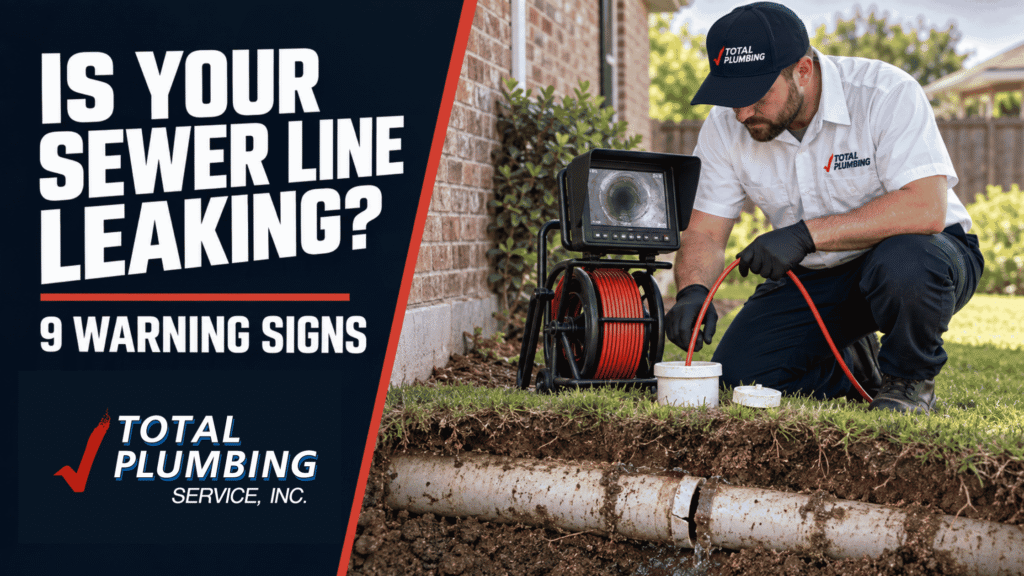
How to Tell If Your Sewer Line Is Leaking: 9 Warning Signs
A sewer line can leak beneath your yard or foundation without immediately causing sewage to back up into your home. Wastewater may escape through a cracked pipe, separated connection or deteriorated section before it reaches the municipal sewer system.
Because most sewer piping is hidden underground, the first warning signs are often subtle. You may notice an unexplained odor, recurring drain problems or changes in the soil around your home long before the damaged pipe becomes visible.
These symptoms do not automatically prove that your sewer line is leaking. Irrigation problems, water-supply leaks, poor drainage and plumbing-vent issues can create similar conditions. Professional testing is the best way to confirm whether the sewer system is leaking and determine which section is affected.
Here are nine signs of a sewer line leak that Dallas–Fort Worth homeowners should watch for.
A sewer leak occurs when wastewater escapes through an opening in the drainage system. A sewer backup occurs when wastewater cannot flow forward and begins returning through toilets, showers, tubs or floor drains.
A damaged sewer pipe can leak without backing up. It can also collect debris until the line becomes obstructed, eventually causing both problems.
Signs more closely associated with a leak include:
- Persistent outdoor sewer odors
- Wet or soft soil
- Unusual vegetation growth
- Soil erosion
- Moisture near the foundation
Signs more closely associated with a backup include:
- Sewage rising through a shower or bathtub
- Multiple fixtures backing up
- Toilets overflowing when other fixtures drain
- Wastewater around a sewer cleanout
- Sudden widespread drainage failure
If sewage is actively entering your home, stop using water and contact a sewer-backup plumber promptly.
How Do Plumbers Test Sewer Lines for Leaks?
No single test is appropriate for every property. The plumbing layout, symptoms, accessibility and pipe condition determine which diagnostic methods should be used.
Visual Inspection
The plumber will review the symptoms and inspect accessible fixtures, cleanouts, exposed piping and affected areas.
The location of odors, moisture and drainage problems can help determine whether the issue involves one fixture, a branch drain, the building sewer or an unrelated water source.
Sewer-Camera Inspection
A flexible camera can be inserted through an accessible cleanout to inspect the interior of the sewer pipe.
A camera may reveal:
- Cracks
- Tree roots
- Separated joints
- Corrosion
- Foreign objects
- Low sections
- Misaligned connections
- Partial or complete collapse
Camera inspections are extremely useful, but a camera does not always confirm whether a pipe is watertight. Grease, standing water and debris may also block the camera’s view.
A visible crack suggests damage, but additional testing may be necessary to determine whether the drainage system is actively leaking.
Hydrostatic Sewer Testing
During a hydrostatic test, the sewer system is isolated and filled to a controlled level. The plumber monitors whether that level drops.
A loss of water may indicate that part of the tested drainage system is leaking. However, the initial test may not identify the exact location of the defect.
The property must have suitable access, and the test should be performed by a qualified plumbing professional using methods appropriate for the plumbing system.
Sewer Isolation Testing
When the initial test indicates a leak, isolation testing can help narrow down the affected section.
Test balls may be positioned at strategic locations to divide the drainage system into smaller portions. Each section is then tested individually.
This process can help determine whether the leak is:
- Beneath the foundation
- In a specific branch line
- Between the house and municipal connection
- Near a bathroom, kitchen or laundry area
- Confined to one section or present in several areas
Accurate isolation helps prevent unnecessary excavation and allows repair options to be based on the actual location of the problem.
Smoke Testing
Smoke testing may be useful when the primary symptom is sewer gas rather than water loss.
Nontoxic test smoke is introduced into the drainage or venting system. Smoke appearing from an unintended location may reveal an open connection, damaged vent or other pathway through which sewer gas is escaping.
Smoke testing and hydrostatic testing answer different questions, so the plumber will determine which method matches the symptoms.
How to Tell If Your Sewer Line Is Leaking: 9 Warning Signs
1. Persistent Sewer Odors Inside Your Home
A properly functioning drainage system should prevent sewer gas from entering your living space. If a sewage odor continues to return, there may be a problem with a drain, plumbing vent, fixture seal or sewer pipe.
Common locations for sewer odors include:
- Bathrooms that are rarely used
- Areas around toilets
- Laundry rooms
- Under sinks
- Rooms near floor drains
- Areas close to plumbing walls
- Spaces near the foundation
A dry plumbing trap is one of the simplest possible causes. When the water inside a trap evaporates, sewer gas can pass through the drain opening. Running water into an unused fixture may refill the trap and stop the odor.
If the smell persists after traps have been filled, a plumber may need to inspect the drainage and venting system. An underground sewer leak, damaged wax ring, cracked drainpipe or disconnected vent can produce similar symptoms.
2. Sewer Odors in Your Yard
A strong wastewater smell outside may indicate that sewage is escaping from an underground pipe. The odor may be especially noticeable near the route between your home and the municipal sewer connection.
Pay attention to odors around:
- Sewer cleanouts
- Damp areas of the lawn
- Sunken or unusually soft soil
- The side of the house where plumbing exits
- Landscaping near the sewer lateral
- Areas that smell worse after fixtures are used
Outdoor odors can also come from municipal sewer infrastructure, neighboring properties, standing water or damaged cleanout caps. The location and timing of the odor can help a plumber determine what should be tested.
3. Multiple Slow Drains
One slow sink usually indicates an obstruction close to that individual fixture. Several slow drains throughout the home can point to a problem farther downstream.
You may have a main sewer-line issue when:
- Multiple fixtures drain slowly
- A toilet bubbles when a nearby sink is used
- Water rises in the shower when a toilet is flushed
- Drains make gurgling sounds
- The lowest fixtures are affected first
These symptoms are commonly associated with a blockage, but damaged sewer pipes can also collect debris and cause recurring drainage problems. Roots, corrosion, separated joints and collapsed sections can restrict flow inside the line.
A slow drain alone does not confirm a leak. It indicates that the system should be evaluated before the obstruction becomes a complete backup.
4. Recurring Sewer-Line Clogs
A sewer line that repeatedly becomes clogged may have an underlying structural defect.
Professional cleaning might restore flow temporarily, but the stoppage can return when the pipe contains:
- Tree-root intrusion
- Deteriorated cast iron
- Separated connections
- Cracks or openings
- Improper slope
- A low section or sewer-line belly
- A partial collapse
- Heavy grease or debris buildup
The recurring obstruction may form in the same damaged area each time. If a previously cleaned sewer line stops flowing again, ask why the clog developed instead of continuing to treat only the immediate blockage.
Once the line is clear enough to inspect, a sewer camera may reveal the condition responsible for the recurring problem.
5. Soggy or Unusually Soft Areas in the Yard
Wastewater escaping from an underground sewer lateral may saturate the surrounding soil. This can create a wet, soft or muddy area even when there has not been recent rain.
Possible warning signs include:
- Soil that remains wet during otherwise dry weather
- Mud appearing along the sewer-line route
- A depression forming in the yard
- Unexplained erosion
- Standing water near a cleanout
- A section of lawn that feels unusually soft
Before assuming the sewer line is responsible, check for irrigation leaks, drainage problems and water-supply line leaks. A moving water meter when all fixtures and appliances are off may indicate a pressurized water leak rather than a sewer leak.
Unlike a water-supply pipe, a sewer line normally carries wastewater only when fixtures are being used. The wet area may therefore change depending on household water usage.
6. An Unusually Green Patch of Grass
Wastewater contains moisture and organic material that may cause vegetation above a leaking pipe to grow differently from the surrounding lawn.
A suspicious area might appear:
- Greener than the rest of the yard
- Thicker or faster-growing
- Wet despite limited irrigation
- Located along the expected sewer-line route
- Surrounded by soil that has become soft or uneven
A green patch does not prove that a sewer line is leaking. Irrigation coverage, shade, soil conditions and landscaping treatments can produce the same effect.
However, unusual plant growth combined with sewer odors, soft soil or recurring drainage problems deserves further investigation.
7. Soil Movement or Changes Near the Foundation
A long-term underground leak can change the moisture content of the soil around a buried pipe. In North Texas, where expansive clay soil already responds strongly to changing moisture conditions, abnormal saturation or erosion may contribute to soil movement.
Possible signs include:
- New depressions in the yard
- Soil pulling away from or washing out near the foundation
- Unexplained settlement along a buried line
- Cracks developing near plumbing penetrations
- Changes in patios, walkways or landscaping
Foundation cracks have many potential causes and should not automatically be blamed on a sewer leak. Seasonal soil movement, drainage, construction conditions and water-supply leaks may all contribute.
Plumbing testing can help determine whether the sanitary sewer system is losing water before major excavation or foundation work is considered.
8. Unexplained Moisture, Mold or Discoloration
A sewer line located beneath the foundation or behind a wall may allow moisture to appear in unexpected places.
Homeowners may notice:
- Damp flooring
- Discoloration near baseboards
- Musty odors
- Moisture around plumbing walls
- Mold or mildew that repeatedly returns
- Flooring that begins lifting or changing shape
- Dampness without a corresponding water-meter change
These symptoms can also be produced by a water-supply leak, appliance connection, roof leak, HVAC condensate problem or exterior drainage issue.
Because sewage contains contaminants, avoid direct contact with unexplained wastewater. Keep children and pets away from the affected area until the source has been identified.
9. Increased Pest or Insect Activity
Openings in a damaged sewer line may provide moisture, shelter or a potential entry route for insects and rodents.
An increase in flies, roaches or rodents does not necessarily mean that a sewer pipe is broken. However, unusual pest activity combined with sewer odors or drainage problems may justify a plumbing inspection.
A camera inspection can sometimes reveal openings, separated joints or damaged cleanouts that allow pests to enter the plumbing system.
Can a Sewer Camera Find Every Leak?
No. A camera can identify many visible problems, but it cannot always prove that a pipe is leaking.
For example, the camera may pass over a small crack without showing whether wastewater is escaping through it. Standing water or buildup may hide damaged areas, and some branch lines may not be accessible from the available cleanout.
That is why professional sewer leak detection may combine camera inspection with hydrostatic and isolation testing.
The objective is not simply to find something unusual on camera. It is to determine whether the system is leaking, identify the affected section and recommend a repair based on evidence.
What Causes Sewer Lines to Leak?
Common causes include:
Aging Cast-Iron Pipe
Older cast-iron sewer pipes can corrode, crack and develop rough interior surfaces. Deteriorated areas may leak and collect material that contributes to recurring stoppages.
Tree-Root Intrusion
Roots seek moisture and can enter through small cracks or separated joints. Once inside, they may grow and collect paper, grease and debris.
Shifting Soil
Expansive North Texas clay soil contracts during dry conditions and expands when moisture returns. This movement can place stress on buried piping and connections.
Improper Installation
Inadequate support, incorrect slope, poor bedding and improperly connected fittings can contribute to premature sewer-line failure.
Physical Damage
Excavation, construction and heavy equipment can damage buried sewer piping. Damage may not become apparent until odors, drainage problems or soil changes develop.
Sewer-Line Bellies
A low section allows wastewater and solids to collect instead of flowing consistently toward the municipal sewer. Standing material may contribute to repeated blockages and pipe deterioration.
How Is a Leaking Sewer Line Repaired?
The appropriate repair depends on the location, pipe material and extent of damage.
Localized Sewer Repair
A spot repair may be appropriate when one accessible section is damaged and the remaining pipe is in good condition.
Sewer-Line Replacement
Replacement may be more dependable when deterioration affects a substantial portion of the line or several defects are present.
Under-Slab Repair
When the damaged pipe is beneath the foundation, access options may include tunneling beneath the slab or opening the foundation from above. The appropriate method depends on the pipe location and structure.
Sewer Rerouting
Rerouting may allow the damaged line to be abandoned while a new code-compliant route is installed around or through a more accessible area.
A reputable plumber should explain the test results, repair alternatives and pricing before work begins.
How Much Does Sewer-Line Leak Repair Cost?
Sewer-line repair costs vary significantly because the visible symptoms do not reveal the complete scope of work.
Pricing depends on:
- The location and depth of the leak
- Whether the pipe is beneath a yard, driveway or foundation
- The damaged pipe material
- The number of leaking sections
- Access to cleanouts and plumbing branches
- Whether tunneling, excavation or concrete access is required
- The amount of pipe requiring replacement
- Permit and inspection requirements
- Restoration work following the repair
A small accessible repair is different from replacing deteriorated piping beneath a foundation. Professional testing should occur before a major repair price is presented.
Does Homeowners Insurance Cover a Sewer-Line Leak?
Coverage depends on the cause of the damage and the terms of the individual policy.
Insurance policies may distinguish between:
- Damage caused by escaping wastewater
- Access required to reach the pipe
- Repairing the plumbing pipe itself
- Sewer backup damage
- Gradual deterioration
- Service-line coverage
Damage caused by aging, corrosion or long-term leakage may be treated differently from a sudden accidental failure.
Homeowners should document the affected area, retain plumbing reports and contact their insurance carrier for a coverage determination. Ask specifically whether the policy includes sewer-backup or underground service-line coverage.
Common Gas Leak and Repair Questions
How can I tell if my sewer line is leaking?
Possible signs include persistent sewer odors, wet or soft soil, unusually green grass, recurring drain problems and unexplained moisture near the foundation. Professional testing is necessary because irrigation, water-supply and drainage problems can produce similar symptoms.
Can a sewer line leak without causing a backup?
Yes. Wastewater may escape through a crack or separated connection while the pipe continues carrying some flow. A backup happens when the line becomes obstructed and wastewater can no longer move forward normally.
Will a sewer camera show a leaking pipe?
A camera may show cracks, roots, corrosion, separated joints and collapsed sections. However, it cannot always prove whether the system is watertight. Hydrostatic and isolation testing may be needed.
How do plumbers test sewer lines beneath a foundation?
Depending on the plumbing system, a plumber may perform a hydrostatic test followed by isolation testing to narrow the problem to a specific branch or section.
Professional Sewer Leak Detection in Dallas–Fort Worth
A hidden sewer leak should be diagnosed before repair work begins. Excavating based only on odors, damp soil or a camera image can lead to unnecessary disruption if the actual problem is somewhere else.
Total Plumbing Service Inc. provides sewer-camera inspections, hydrostatic testing, isolation testing and sewer repair options throughout Dallas–Fort Worth.
Our licensed plumbers evaluate the system, explain what the testing shows and provide upfront flat-rate repair options before authorized work begins.
Family-owned and serving North Texas since 1996, Total Plumbing helps homeowners locate underground sewer problems and choose an appropriate repair based on the actual condition of the system.
If you suspect a sewer line leak beneath your yard or foundation, contact Total Plumbing to schedule an evaluation.