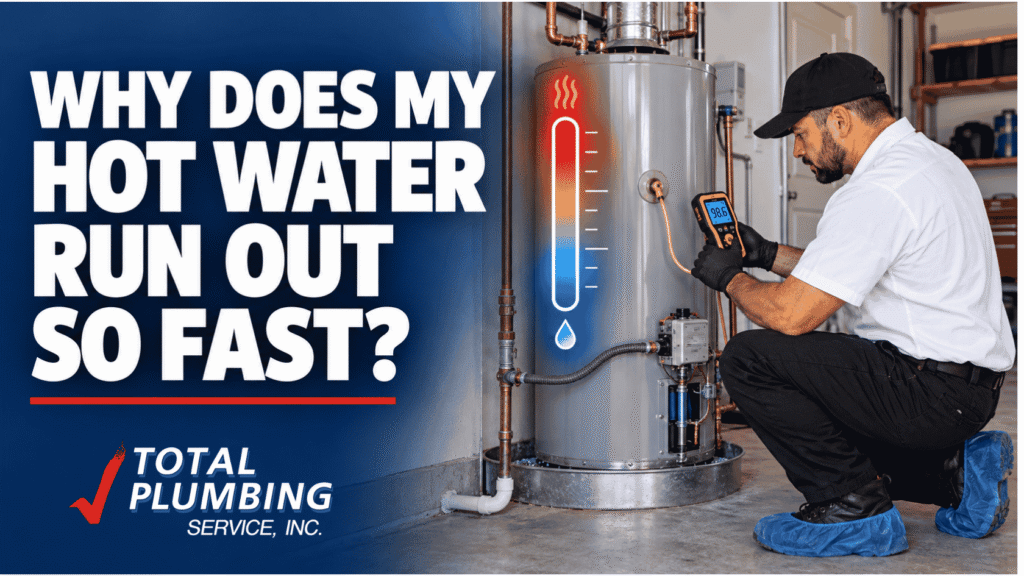
Few plumbing problems are more frustrating than stepping into a hot shower only for the water to turn cold a few minutes later.
When homeowners tell me their hot water runs out too quickly, the first things I want to know are whether the home has a tank or tankless water heater, how old the equipment is and whether the problem happened suddenly or gradually worsened.
Those details matter because running out of hot water does not automatically mean you need a new water heater. The cause could be something as straightforward as an incorrect temperature setting or a failed heating element. However, it can also indicate sediment buildup, deteriorating components or a water heater that is no longer large enough for the household.
Here are the most common reasons your hot water may not be lasting as long as it should.
A conventional tank water heater stores a limited amount of hot water. Once that supply has been used, the water heater needs time to heat the cold water entering the tank.
A 40- or 50-gallon water heater does not necessarily deliver that exact amount of consistently hot water. Cold water begins entering the tank as soon as hot water leaves, gradually reducing the temperature of the remaining supply.
Your hot water may run out faster when:
If the water heater has always struggled to keep up, it may simply be undersized for the home’s current demand.
Minerals naturally present in the water can settle at the bottom of a tank water heater. As sediment accumulates, it takes up space that should otherwise hold hot water.
A 50-gallon tank with substantial sediment buildup may provide considerably less usable hot water than it did when it was new.
Sediment can also interfere with heat transfer and make the water heater work harder. Other signs may include:
Flushing may help some water heaters, but it is not always appropriate for an older tank that has never been maintained. Disturbing heavy sediment can expose existing corrosion or create problems with an aging drain valve.
A plumber should evaluate the water heater’s age and condition before recommending maintenance.
Electric water heaters commonly contain an upper and lower heating element.
When one element fails, the water heater may still produce some hot water, but it will not heat the full tank properly. This often creates a situation where the water starts hot and then turns cold much faster than normal.
A failed element can also cause:
Testing and replacing an electric heating element involves electrical components and should be handled by a qualified professional.
The thermostat controls when the water heater heats the water and how hot it becomes.
If the thermostat is set too low, miscalibrated or failing, the water inside the tank may never reach the intended temperature. That means you will use more hot water to achieve a comfortable shower temperature and empty the tank sooner.
Do not simply turn the thermostat to its highest setting. Excessively hot water creates a scalding risk and can place additional stress on the system.
A plumber can test the thermostat, heating elements and actual water temperature to determine whether the controls are operating correctly.
The dip tube carries incoming cold water toward the bottom of a traditional water-heater tank.
This allows the newly supplied cold water to be heated without immediately mixing with the hottest water near the top of the tank.
If the dip tube cracks, deteriorates or becomes disconnected, cold water may enter near the top of the tank and mix with the hot water leaving for your fixtures. The result can be a shower that starts hot but quickly becomes lukewarm.
Because the dip tube is located inside the water heater, professional inspection is usually needed to confirm the problem.
Gas water heaters use a burner beneath the tank to heat the water.
A dirty burner, ignition problem, failing gas-control valve or inadequate gas supply can prevent the water heater from recovering properly. The tank may produce some hot water but take much longer than normal to heat the next supply.
Possible warning signs include:
If you smell gas, leave the area immediately and contact the gas utility or emergency services from a safe location. Do not operate switches or attempt to relight the equipment.
Sometimes the problem is not inside the water heater.
A failed faucet cartridge, mixing valve or improperly connected fixture can allow cold water to cross into the hot-water piping. This can make hot water throughout the home feel lukewarm or cause the temperature to change unexpectedly.
A crossover becomes more likely when:
A plumber can isolate fixtures and test the system to identify where the unwanted mixing is occurring.
As water heaters age, sediment, corrosion and worn components can reduce their performance.
An older water heater may still operate but take longer to recover, hold less usable hot water or require increasingly frequent repairs.
Replacement may make more sense when:
Age alone does not determine whether a water heater should be replaced. Its condition, installation, repair history and ability to meet the household’s needs all matter.
A licensed plumber can help you compare water-heater repair with water-heater replacement before you commit to either option.
A properly operating tankless system does not store a limited tank of hot water. However, it can still struggle to maintain temperature when demand exceeds its capacity.
Common tankless problems include:
If the water becomes cold only when several fixtures are running, the home may be demanding more hot water than the system can produce at one time.
If temperatures fluctuate even when only one fixture is operating, the unit may need professional maintenance or repair.
You can gather several useful details without taking the water heater apart:
These details can help your plumber narrow down the likely cause.
Do not remove electrical panels, disconnect gas components or attempt to bypass a safety control.
Repair may be appropriate when the problem involves a replaceable thermostat, heating element, valve, dip tube or another accessible component and the tank remains in good condition.
Replacement may be more practical when the tank is corroded, leaking, repeatedly failing or no longer capable of meeting the household’s hot-water needs.
If your current system is consistently undersized, this may also be a good time to compare a larger tank with a properly sized tankless water heater.
The right answer depends on the equipment and the home. A good plumber should diagnose the problem, explain the available options and provide pricing before beginning the work.
If your hot water runs out faster than it used to, there is usually a reason.
Total Plumbing Service Inc. provides professional water-heater services throughout Dallas–Fort Worth. Our licensed plumbers can test the system, identify the cause and explain whether repair, maintenance or replacement makes the most sense.
We provide upfront options before work begins, so you can make an informed decision without being pressured into unnecessary equipment.
Contact Total Plumbing today to schedule water-heater service.