Why Is My Water Pressure Low? Common Causes in DFW Homes
“Why is my water pressure low?” is one of those plumbing questions that sounds simple but can have several very different answers.
Sometimes, the problem is nothing more than mineral buildup in a showerhead. Other times, low water pressure is the first noticeable sign of a hidden leak, a failing pressure regulator or a damaged underground water line.
As a plumber, the first thing I want to know is not simply whether the pressure is low. I want to know where it is low, when it started and whether it affects the hot water, cold water or both.
Those details can quickly narrow down the problem and help you determine whether you have a minor fixture issue or something that needs professional attention.
First, Is the Low Water Pressure Affecting One Fixture or the Whole House?
Before assuming there is a major plumbing problem, check several fixtures throughout the house.
Turn on a cold-water faucet in the kitchen, a bathroom sink, a shower and an outdoor faucet. Then repeat the test using hot water where available.
Pay attention to the pattern:
-
If only one faucet has low pressure, the problem is probably located at that fixture.
-
If only the hot water is affected, the issue may involve the water heater or hot-water piping.
-
If both hot and cold water are weak throughout the house, look toward the main shutoff, pressure regulator, water service line or municipal supply.
-
If pressure drops only when several fixtures are running, the plumbing system may have a restriction or may not be delivering enough flow for the home’s demand.
-
If the pressure changed suddenly, a valve, leak or utility problem is more likely.
-
If it gradually worsened over several years, corrosion or mineral buildup may be restricting the pipes.
Homeowners often use “water pressure” and “water flow” to describe the same thing. They are related, but they are not identical. Your home may have adequate pressure while a clogged pipe, faucet or filter restricts the amount of water that can pass through it.
most common causes of low water pressure we find in Dallas–Fort Worth homes
1. A Clogged Faucet Aerator or Showerhead
If the problem affects only one faucet or shower, start with the simplest possibility.
The aerator is the small screen attached to the end of a faucet. Over time, sand, rust flakes and mineral deposits can collect inside it. Showerheads can develop the same type of buildup.
Unscrew the aerator or showerhead if it can be removed safely, inspect it and clean away visible debris. You can also briefly test the fixture with the aerator removed.
If the water flows normally without it, you have probably found the restriction.
If the flow remains weak, the problem may be inside the faucet, supply line or shutoff valve.
2. A Partially Closed Shutoff Valve
Your home has a main water shutoff valve, and most individual fixtures have smaller shutoff valves beneath or behind them.
If a valve was not fully reopened after a repair, inspection or water-heater installation, it can restrict water throughout the home or at one specific fixture.
Check whether the affected fixture’s shutoff valves appear to be fully open. You can also look at the home’s main shutoff if you know where it is located and can access it safely.
Do not force an older valve. Corroded or brittle valves can begin leaking when disturbed. If the handle is stuck, heavily corroded or already damp, leave it alone and have a plumber inspect it.
3. A Failing Pressure-Reducing Valve
Some homes have a pressure-reducing valve, often called a PRV, where the main water supply enters the property.
The PRV protects the plumbing system by reducing high municipal water pressure to a safer level for the home. When it begins failing, the pressure may become unusually low, unusually high or inconsistent.
A failing regulator may cause:
Weak pressure throughout the house
Pressure that changes without an obvious reason
A noticeable pressure drop when another fixture turns on
Banging, humming or vibrating pipes
Pressure that is strong one moment and weak the next
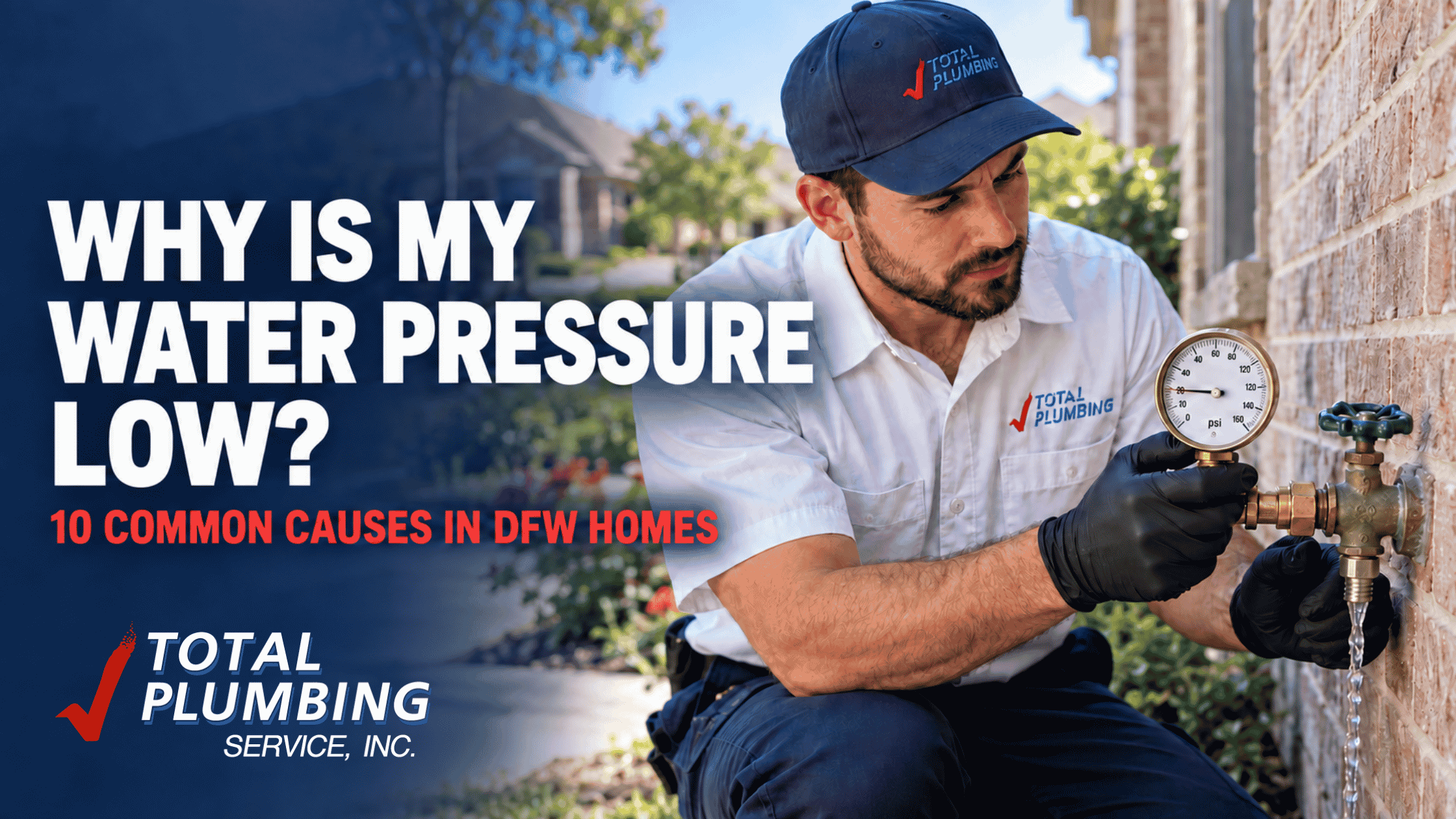
A plumber can test the home’s static and working pressure to determine whether the regulator is operating correctly.
I do not recommend adjusting a pressure regulator without first testing the system. Turning the adjustment screw without knowing the actual pressure can create excessively high pressure and place unnecessary stress on supply lines, fixtures and appliances.
4. A Problem With the Municipal Water Supply
Not every water-pressure problem originates inside your home.
A temporary reduction in municipal pressure can occur because of utility repairs, a damaged public water main, nearby construction or unusually high demand.
Ask a neighbor whether they are experiencing the same problem. If several homes lost pressure at approximately the same time, contact your city’s water department before scheduling an extensive plumbing repair.
You can also check the city’s website or service-alert page for reported work in your area.
If your neighbors have normal pressure but your home does not, the problem is more likely located on your property.
5. A Hidden Plumbing Leak
A leak allows water to escape before it reaches the fixture you are trying to use. Depending on the size and location of the leak, you may notice weak pressure along with other warning signs.
Look for:
An unexplained increase in the water bill
The sound of running water when fixtures are off
Damp drywall, flooring or cabinets
Warm areas on the floor
Musty odors
Discoloration on walls or ceilings
Water collecting near the foundation
A water meter that continues recording usage when no water is being used
One simple check is to turn off every faucet and water-using appliance, make sure no toilets are filling and then look at the water meter. If the meter continues moving, water may be escaping somewhere in the system.
That test can indicate that water is being used, but it cannot tell you where the leak is located. Irrigation systems, running toilets and other connected equipment should also be considered.
When the source is not visible, professional leak detection can help locate the problem before unnecessary openings or excavation are recommended.
6. A Leaking or Damaged Main Water Line
The water service line carries fresh water from the meter to your home. If that underground line cracks, separates or deteriorates, the house may receive less water than it should.
Possible signs of a main water-line problem include:
Low pressure throughout the house
A suddenly higher water bill
Damp or unusually green areas in the yard
Water collecting near the meter
Soft, eroded or sinking soil
The sound of water running underground
A water meter that moves when everything is turned off
A sudden loss of water service
North Texas soil can make these problems more complicated. Our clay soil expands when it absorbs moisture and contracts during prolonged dry weather. That movement can place stress on underground piping and connections.
Low pressure by itself does not prove that the main line is leaking. The system should be tested and the leak located before anyone starts digging.
If the problem is between the meter and the house, Total Plumbing provides main water line repair and replacement throughout the DFW area.
7. Corroded Galvanized Water Pipes
Many older homes were built with galvanized steel water lines. These pipes can corrode internally as they age.
The frustrating part is that a galvanized pipe may still look acceptable from the outside while the opening inside has become much smaller. Rust and mineral deposits gradually restrict the amount of water that can pass through the line.
Common signs of deteriorating galvanized pipes include:
Pressure that has gradually worsened
Weak flow at several fixtures
Rust-colored water when a faucet is first opened
A major pressure drop when two fixtures run at once
Frequent leaks or repairs
Visible corrosion around exposed pipe connections
Cleaning a faucet will not solve a restriction located inside the piping. If deterioration affects a large portion of the system, replacing the problem piping may make more sense than continuing to repair individual sections.
A licensed plumber can evaluate the pipe material, condition and layout before recommending repiping.
8. Mineral or Sediment Buildup
Even when a home does not have galvanized piping, minerals and sediment can restrict fixtures, valves and smaller water passages.
Buildup commonly appears in:
Faucet aerators
Showerheads
Cartridge valves
Washing-machine screens
Supply lines
Water-heater connections
Filtration equipment
If the problem is limited to one fixture, cleaning or replacing the restricted component may restore normal flow.
When restrictions appear throughout the home, it is worth looking at the age and condition of the plumbing system, water heater and any water-treatment equipment.
If mineral buildup is a recurring concern, a properly selected whole-home water filtration system may help address certain water-quality problems. The right equipment depends on what is actually present in the water, so testing and proper system selection matter.
9. A Clogged Water Filter or Water Softener
Whole-house filters and water softeners can cause noticeable pressure loss when they become restricted or malfunction.
If your home has water-treatment equipment, check when the filter was last replaced or serviced. You may notice that the pressure problem began gradually as the filter collected more sediment.
Some systems have a bypass setting that can help a professional determine whether the equipment is causing the restriction. Follow the manufacturer’s instructions and do not operate unfamiliar valves if you are uncertain about their purpose.
If normal pressure returns when the equipment is properly bypassed, the filter, softener or control valve may need service.
10. Too Many Fixtures Are Running at Once
Every water-supply system has a limited capacity. You may notice weaker flow when a shower, washing machine, dishwasher and irrigation system operate at the same time.
A small change is normal. A dramatic pressure loss is not.
If turning on a second fixture causes the first fixture to slow to a trickle, there may be:
A restricted service line
Corroded interior piping
A failing pressure regulator
A partially closed valve
An undersized section of piping
A problem with a filter or softener
Insufficient municipal supply pressure
The important question is whether the system has always behaved this way or whether the problem is new. A recent change usually points to a developing restriction, equipment failure or leak.
What Can You Safely Check Yourself?
Before calling a plumber, there are several observations you can make without taking the plumbing apart:
Test more than one faucet.
Compare the hot and cold water.
Determine whether the problem affects one room or the whole house.
Ask a neighbor whether their pressure has also changed.
Clean an easily removable faucet aerator or showerhead.
Check when whole-house filters were last replaced.
Look for visible leaks or damp areas.
Make sure no toilet is quietly running.
Check the water meter while all water use is stopped.
Think about whether the change was sudden or gradual.
Write down what you find. Those details can save diagnostic time and help your plumber focus on the most likely causes.
When Does Low Water Pressure Suggest a Leak?
I become more concerned about a possible leak when low pressure appears together with a high water bill, a moving water meter, wet soil or the sound of water running.
A sudden drop throughout the house is also more concerning than one slow bathroom faucet.
Call a plumber promptly if:
The pressure changed suddenly
The meter moves when no water is being used
Water is collecting near the meter or foundation
The yard is wet without an obvious cause
Your water bill increased substantially
You hear water running inside a wall or beneath the floor
The home has little or no water
The pressure problem is getting worse
If water is actively damaging the property and you can safely operate the correct shutoff valve, turn off the supply. Do not enter standing water near electrical equipment.
How Does a Plumber Diagnose Low Water Pressure?
Good diagnosis begins with testing—not guessing and not immediately recommending the largest repair.
Depending on the symptoms, a plumber may:
Measure the home’s water pressure
Compare static pressure with pressure while fixtures are running
Inspect the main shutoff and pressure regulator
Check individual fixtures and supply valves
Determine whether hot water, cold water or both are affected
Inspect filtration and softening equipment
Look for signs of galvanized-pipe deterioration
Isolate portions of the plumbing system
Check the water meter for unexplained flow
Perform leak detection when needed
Evaluate the underground water service line
Once the actual cause is identified, the plumber can explain whether the solution is a fixture repair, valve replacement, regulator replacement, leak repair, water-line work or repiping.
Should You Install a Water-Pressure Booster?
A booster pump can be useful when the municipal water supply consistently delivers inadequate pressure and the plumbing system is otherwise in good condition.
It should not be the first recommendation for every low-pressure problem.
Installing a booster without correcting a leak, clogged line, failing regulator or partially closed valve only hides the real issue. The existing system should be tested before adding equipment.
In many homes, the problem is restricted flow rather than insufficient incoming pressure. A pressure test and plumbing evaluation will help distinguish between the two.
Get an Honest Answer About Your Water Pressure
Low water pressure is not a diagnosis. It is a symptom.
Sometimes, the solution is as simple as cleaning an aerator. Sometimes, it leads us to a hidden leak or a deteriorated water line that needs attention. The right repair depends on where the pressure loss occurs and what caused it.
Total Plumbing Service Inc. has served North Texas homeowners since 1996. Our licensed plumbers provide straightforward diagnostics, upfront repair options and professional plumbing services without assuming that every pressure problem requires a major project.
Our standard $39 diagnostic visit gets a licensed plumber to your home to evaluate the problem. If specialized testing is needed, we will explain the next step and the price before proceeding.
We serve homeowners throughout Dallas, Rowlett, Garland, Rockwall, Plano, Richardson, Mesquite, Frisco, McKinney, Irving and surrounding DFW communities.
If your water pressure has changed and you cannot identify the reason, schedule service with Total Plumbing. We will determine what is happening and explain the appropriate options before work begins.