Cast-Iron Sewer Pipes: Lifespan, Warning Signs, Repair & Replacement
If you own an older home in the Dallas-Fort Worth area, there may be cast-iron sewer pipes underneath your home or buried in your yard.
Cast iron was commonly used for residential drain and sewer systems before modern plastic piping became widespread. It was a strong and durable material, and many cast-iron plumbing systems have remained in service for decades.
But cast iron doesn’t last forever.
As these pipes age, corrosion, buildup, cracking, deterioration, and movement can eventually interfere with the sewer system. For homeowners with cast-iron pipes underneath a concrete slab, determining the condition of the plumbing can be especially important because problems may remain hidden until recurring drain backups or other symptoms develop.
So, how long do cast-iron sewer pipes last? What are the signs they’re failing? Should cast iron be replaced with PVC? And how much does cast-iron sewer pipe replacement cost?
Here’s what North Texas homeowners should know.
How Long Do Cast-Iron Sewer Pipes Last?
There isn’t a specific age at which every cast-iron sewer pipe fails.
You’ll commonly see estimated service lives measured in many decades, but the actual condition of a sewer pipe depends on much more than the year it was installed.
Factors affecting the lifespan of cast-iron sewer pipes include:
- Pipe age and original quality
- Installation methods
- Soil and ground conditions
- Corrosion
- Wastewater exposure
- Pipe movement
- Previous repairs
- Chemicals put down the drains
- Maintenance and cleaning history
This is particularly important when evaluating older homes. An old cast-iron sewer pipe isn’t automatically a failed sewer pipe. Likewise, a pipe doesn’t need to reach a particular age before it can develop problems.
The better question is:
What condition is the cast iron currently in?
A professional sewer inspection can provide much more useful information than simply estimating replacement based on the age of the home.
What Causes Cast-Iron Sewer Pipes to Fail?
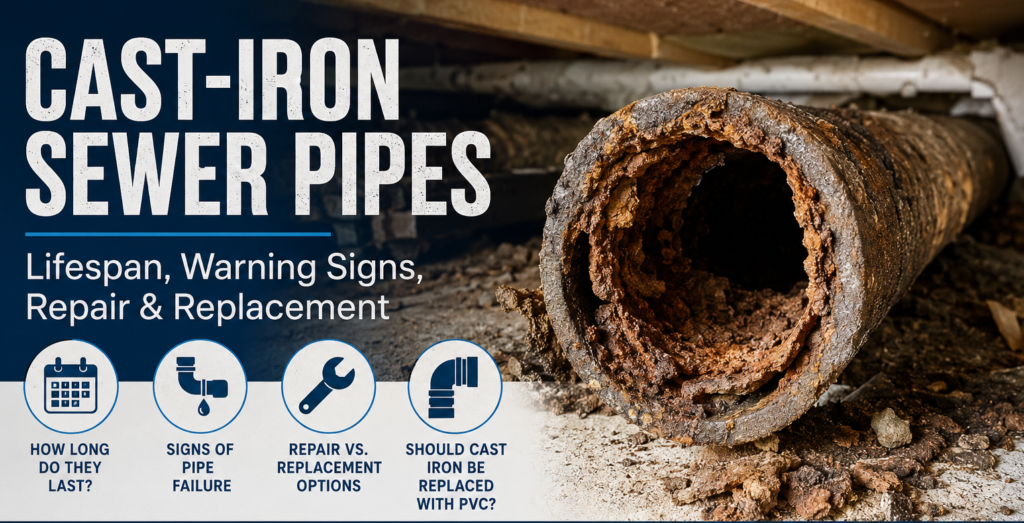
Cast iron is metal, so one of its biggest long-term concerns is corrosion.
Years of exposure to wastewater and moisture can gradually deteriorate the pipe.
The inside of an aging cast-iron pipe may become rough from corrosion and scaling. Waste, toilet paper, grease, and other material can then have a harder time moving through the line.
Some pipes experience significant deterioration along the bottom, or “channel,” of horizontal sections where wastewater has flowed for decades.
Other potential problems include cracks, holes, separated connections, root intrusion, and sections of pipe that no longer maintain proper drainage.
North Texas soil movement can add another consideration. Expansive clay soils can shrink and swell as moisture conditions change, potentially placing additional stress on underground plumbing and connections.
What Are the Signs of Cast-Iron Pipe Failure?
Because most sewer piping is hidden underneath your home or underground, you probably won’t actually see the damaged pipe.
Instead, you’ll notice symptoms from your plumbing system.
Recurring Sewer Line Clogs
One of the biggest warning signs is a sewer line that keeps clogging.
Clearing a blockage may restore drainage temporarily, but if you’re repeatedly calling for drain cleaning on the same line, it’s worth determining why the blockage keeps coming back.
Heavy corrosion, scaling, roots, damaged piping, or other structural problems could be contributing.
Multiple Slow Drains
One slow bathroom sink may simply have a localized clog. Several slow fixtures throughout the house can indicate a larger drainage problem.
Gurgling Toilets or Drains
Gurgling or bubbling from toilets and drains can occur when wastewater and air aren’t moving normally through the drainage system.
Sewage Backing Up Into the Home
Wastewater coming up through a shower, bathtub, toilet, or floor drain is a major warning sign.
Recurring backups deserve further investigation rather than simply being treated as routine clogs.
Sewer Odors
Persistent sewer odors inside or around your home can have several causes, including problems with drainage or vent piping.
Unexplained Moisture or Soil Changes
If a damaged underground sewer pipe allows wastewater to escape, you may notice unusual moisture, odors, or changes around the affected area.
Any of these symptoms can justify having the sewer system evaluated.
How Do You Know if Cast-Iron Pipes Need to Be Replaced?
A sewer camera inspection is often one of the first steps.
A specialized camera can be inserted into accessible sewer piping so a plumber can evaluate visible conditions inside the line.
Depending on the pipe and camera access, an inspection may reveal:
- Heavy corrosion
- Scaling
- Restricted pipe diameter
- Cracks
- Holes
- Root intrusion
- Standing water
- Offset or separated connections
- Deteriorated sections
- Other obstructions
The goal is to gather evidence before deciding what repair is appropriate.
Simply discovering that a home has cast-iron plumbing doesn’t mean the entire sewer system needs replacement.
Can Cast-Iron Sewer Pipes Be Repaired?
Yes. Replacement isn’t always the only option.
If damage is limited to one accessible section and the surrounding piping remains in usable condition, a localized sewer repair may make sense.
If the pipe remains structurally sound but contains significant buildup, professional cleaning may also be an option depending on its condition.
However, repeated spot repairs become less attractive when deterioration is widespread.
For example, repairing one failed section may not provide much long-term value if camera inspections show that several other sections are severely deteriorated.
That’s when a larger cast-iron sewer pipe replacement may make more sense.
Cast-Iron Pipes Under a Slab: What Happens When They Fail?
Cast-iron sewer pipes located under a concrete slab foundation present a particular challenge.
The pipe can’t simply be dug up from the yard.
The plumber first needs to determine where the damaged piping is located and then develop a way to access it.
Depending on the home, plumbing layout, foundation, and extent of the repair, access may involve working through portions of the slab or excavating underneath the foundation.
In North Texas, tunneling underneath the slab is one method that may be used for extensive sewer repairs.
A tunnel is excavated beneath the foundation to reach the plumbing from underneath. The plumber can then access deteriorated piping without necessarily removing large sections of finished flooring inside the house.
Whether tunneling is appropriate depends entirely on the property and repair scope.
Major factors include the:
- Amount of pipe requiring replacement
- Location of the damaged sewer line
- Depth of the piping
- Number of affected branches
- Accessibility
- Need for excavation
- Need for tunneling underneath a slab
- Condition of the remaining sewer system
- Pipe configuration
- Permitting and inspection requirements
- Restoration required after accessing the plumbing
This is why an accurate cast-iron sewer repair cost usually requires an on-site evaluation.
Be cautious about comparing sewer replacement estimates based only on a price-per-foot figure. Two homes with the same amount of damaged piping can require very different amounts of labor and access work.
A good estimate should explain what is being replaced, why it’s being replaced, how the plumbing will be accessed, and what is included in the proposed work.
Should Cast Iron Be Replaced With PVC?
When deteriorated cast-iron sewer piping needs replacement, PVC is commonly used for modern residential drain and sewer installations where appropriate and permitted.
PVC offers several advantages.
Unlike cast iron, PVC doesn’t rust. Its smooth interior can also provide an efficient pathway for wastewater when the system is properly designed and installed.
PVC is also lighter and easier to work with than cast iron.
However, the decision isn’t simply “cast iron bad, PVC good.”
Cast iron has characteristics that made it a successful plumbing material for generations, including strength and excellent sound-dampening qualities.
The important issue is the condition of the existing pipe.
If your cast iron is severely deteriorated and needs replacement, installing properly sized and supported modern piping can provide a long-term solution.
Do You Need to Replace All Cast-Iron Pipes at Once?
Not necessarily.
This is where a thorough inspection becomes valuable.
Suppose a camera inspection reveals one isolated damaged section while the rest of the accessible system remains in good condition. A localized repair may be reasonable.
Now imagine the inspection reveals extensive corrosion, recurring failures, deteriorated bottoms, and problems throughout multiple branches.
Repeatedly repairing one small section at a time may not make financial sense.
Homeowners should be shown what is happening and given repair options based on the actual condition of their plumbing.
Can You Sell a House With Cast-Iron Pipes?
Having cast-iron plumbing doesn’t automatically make a home unsellable.
Many older homes still contain cast iron.
However, buyers purchasing older properties may request a sewer camera inspection, particularly if there is evidence of recurring drainage problems or previous sewer repairs.
If you’re buying an older Dallas-Fort Worth home, having the sewer system inspected can also help you understand what you’re purchasing.
A normal home inspection can’t necessarily tell you what’s happening inside buried sewer piping.
Is a Sewer Camera Inspection Worth It for an Older Home?
If your home has cast-iron sewer piping and recurring drainage problems, yes, a camera inspection can be extremely useful.
Instead of repeatedly treating the symptom, you’re trying to identify the underlying condition of the sewer system.
It’s especially worth considering when you have:
- Repeated main-line stoppages
- Multiple slow drains
- Previous sewer repairs
- An older home with original plumbing
- Sewer odors
- Recurring backups
- Concerns about pipes beneath the slab
The camera findings can then help determine the next step.
Drain Cleaning vs. Sewer Repair vs. Sewer Replacement
These aren’t interchangeable services.
Drain cleaning removes an obstruction and restores flow.
Sewer repair addresses a specific damaged portion of the piping.
Sewer replacement removes and replaces piping that can no longer reliably perform its job.
The right solution depends on what’s actually causing the problem.
If the pipe is healthy and simply clogged, replacing it wouldn’t make sense.
If the pipe itself is severely deteriorated, repeatedly cleaning it may only provide temporary relief.
Diagnosis should come before the repair recommendation.
Have Cast-Iron Sewer Pipes? Don’t Wait for a Major Backup
If you own an older home, you don’t necessarily need to panic because it has cast-iron plumbing.
But you also shouldn’t ignore recurring warning signs.
If the same sewer line keeps clogging, multiple fixtures drain slowly, toilets regularly gurgle, or wastewater has backed up into your home, it’s time to investigate the underlying cause.
Finding deterioration early can give you more time to understand your options instead of making a major sewer-repair decision during an emergency.
Cast-Iron Sewer Pipe Repair & Replacement in Dallas-Fort Worth
If you’re concerned about cast-iron sewer pipes under your home, Total Plumbing Service Inc. can help determine what’s happening.
Our licensed plumbers provide professional sewer camera inspections, drain cleaning, cast-iron sewer pipe repair, sewer line replacement, sewer leak detection, and tunneling services throughout the Dallas-Fort Worth Metroplex.
Total Plumbing Service Inc. has served North Texas homeowners since 1996. We’ll evaluate the problem, explain what we find, and discuss appropriate repair options based on the actual condition of your sewer system.
Whether you’re dealing with recurring sewer backups or simply want to understand the condition of aging cast-iron plumbing, getting the right diagnosis is the first step.
Contact Total Plumbing Service Inc. to schedule a cast-iron sewer line evaluation in Dallas-Fort Worth.