Who Is Responsible for Sewer Line Repair in North Texas?
When a sewer line backs up, cracks or collapses, one of the first questions homeowners ask is: “Who is responsible for repairing it—the homeowner or the city?”
In most North Texas communities, the homeowner is generally responsible for the private sewer line running from the house to its connection with the public sewer system. The city or utility is generally responsible for the public sewer main serving the neighborhood.
However, the exact point where responsibility changes can vary by city, utility provider, property layout and local regulations. Before authorizing a major repair, homeowners should determine whether the problem is located in their private sewer lateral or the public sewer main.
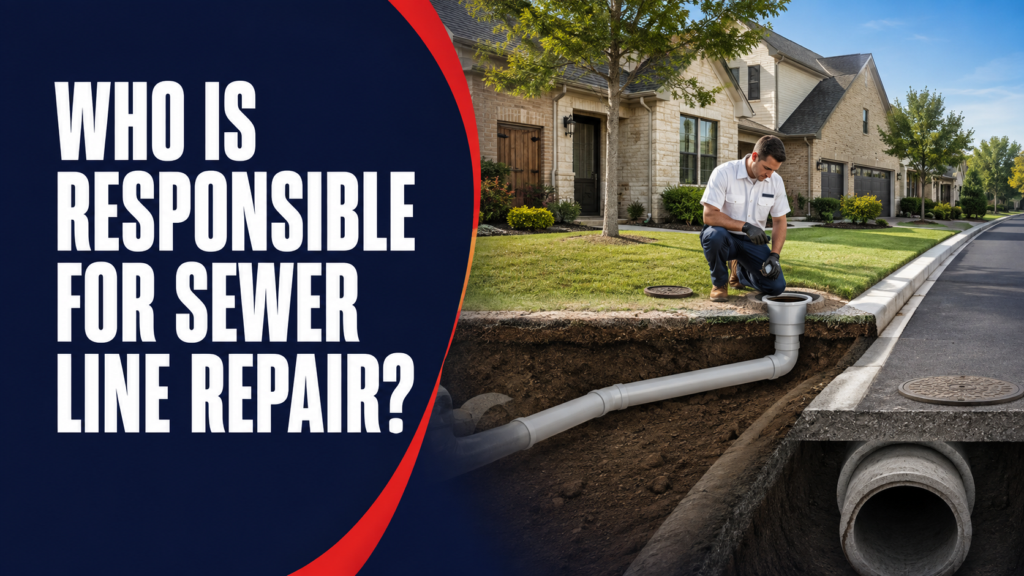
A private sewer lateral is the pipe that carries wastewater away from a home or business and connects it to the public sewer main. Depending on the property, this line may run through the front yard, backyard, alley, easement or beneath a driveway.
The homeowner’s responsibility may extend beyond the property line and continue to the connection with the city sewer main. This means a pipe located beneath a sidewalk, alley or street is not automatically the city’s responsibility.
In Dallas, city materials state that lateral water and sewer lines are the homeowner’s responsibility rather than the city’s. Because municipal rules differ, homeowners should confirm the boundary with their specific utility before proceeding with repairs.
When Is the Homeowner Responsible for Sewer Line Repair?
The homeowner is usually responsible when the problem is located within the private sewer lateral serving only their property.
Common homeowner sewer-line problems include:
- Tree roots entering the sewer pipe
- Cracked, collapsed or deteriorated piping
- Separated pipe connections
- Grease, wipes or foreign objects blocking the line
- Bellied or sagging sewer pipes
- Corroded cast-iron piping
- Damage caused by soil movement
- Improperly installed or undersized piping
- A blockage between the house and public sewer main
If only one home is experiencing recurring backups, the problem is more likely to be within that property’s private sewer line. A professional inspection is still needed to locate the issue and determine the appropriate repair.
When Is the City Responsible for Sewer Lines?
The city or wastewater utility is generally responsible when the problem is inside the public sewer main or other city-owned infrastructure.
Warning signs of a possible municipal sewer problem include:
- Several neighboring properties backing up simultaneously
- Sewage coming from a public manhole
- Wastewater overflowing into the street
- A blockage confirmed beyond the private connection
- A damaged or obstructed city sewer main
For example, the City of Rowlett advises residents to report sewer backups so a crew can investigate. If the blockage is in the city line, the city crew clears it. If the problem is within the customer’s line, the homeowner is notified.
The City of Frisco similarly instructs residents experiencing a sewer backup to contact its Sewer Department so a crew can be dispatched.
Contacting the city first may be appropriate when multiple properties are affected, a manhole is overflowing or there is reason to believe the public sewer main is involved.
Who Is Responsible for the Sewer Line Under the Street?
A sewer pipe being beneath a public street does not necessarily make it city-owned.
In some communities, the homeowner’s private lateral extends from the house all the way to the connection at the public sewer main. That connection could be beneath the street, alley or another public right-of-way.
Responsibility depends on:
- The city or utility’s service-boundary rules
- The location of the public sewer main
- Where the private lateral connects to the main
- Whether the affected pipe serves one property or multiple properties
- Local ordinances and utility agreements
Before repairing a sewer line under pavement or within a public right-of-way, permits, inspections and traffic-control requirements may apply. A licensed plumber can help determine what testing and approvals may be needed.
How Do You Determine Where the Sewer Problem Is?
A plumber may begin by evaluating which fixtures are affected and whether the problem involves one drain, the entire home or multiple neighboring properties.
Diagnostic methods may include:
Sewer Camera Inspection
A specialized camera can be inserted through an accessible cleanout to inspect the inside of the pipe. This may reveal roots, separated connections, corrosion, standing water, collapsed sections or other visible damage.
Sewer-Line Location
Electronic locating equipment can help determine where the camera is beneath the property and estimate the depth of the affected section.
Hydrostatic or Isolation Testing
When a sewer leak is suspected beneath a slab or foundation, additional testing may help determine whether the drainage system is losing water and narrow down the affected section.
Checking Nearby Properties and Manholes
If multiple homes are experiencing problems or a public manhole is overflowing, the issue may involve the municipal sewer system rather than a single private lateral.
A camera inspection can provide valuable information, but it should be interpreted alongside the property’s plumbing layout and symptoms. Not every visible imperfection requires complete sewer-line replacement.
If sewage is entering your home, stop using toilets, sinks, showers, washing machines and dishwashers. Continuing to send water down the drains can make the backup worse.
Then take the following steps:
- Keep people and pets away from contaminated areas.
- Contact the city if multiple homes are affected or a manhole is overflowing.
- Contact a licensed plumber if the problem appears limited to your property.
- Request an inspection before approving extensive excavation or replacement.
- Document visible damage for your insurance provider.
- Avoid opening an exterior cleanout unless you can do so safely, because sewage may be under pressure.
A licensed plumber can determine whether the problem is a removable stoppage or evidence of a damaged sewer pipe.
Standard homeowners insurance does not automatically cover every sewer-line problem. Coverage may depend on what caused the damage, where the pipe is located and whether the policy includes service-line or sewer-backup coverage.
A policy may treat the following expenses differently:
- Repairing the failed sewer pipe
- Accessing a pipe beneath a slab
- Restoring flooring or landscaping
- Cleaning sewage from the home
- Repairing damage caused by the backup
- Replacing an aging or deteriorated line
Normal wear, corrosion, root intrusion and maintenance-related problems may be excluded. Homeowners should contact their insurance provider before beginning non-emergency work and ask specifically about service-line and sewer-backup coverage.
The appropriate repair depends on the pipe material, location, accessibility and extent of the damage.
Potential solutions include:
- Removing a localized stoppage
- Cutting tree roots from the line
- Repairing a damaged pipe section
- Replacing a deteriorated sewer line
- Rerouting the sewer line
- Excavating through the yard
- Tunneling beneath the foundation
- Installing or replacing accessible cleanouts
The right recommendation should address the cause of the problem rather than temporarily relieving the symptoms.
Common Gas Leak and Repair Questions
Is the homeowner responsible for the sewer line from the house to the street?
Usually, the homeowner is responsible for the private sewer lateral connecting the house to the public sewer main. The precise boundary varies by city and utility.
Does the city repair sewer lines on private property?
Cities generally maintain public sewer mains rather than private plumbing. If the affected line serves only one property, the homeowner will often be responsible.
How can I tell whether a sewer backup is the city’s responsibility?
Multiple affected properties, overflowing manholes and a blockage beyond the private connection can indicate a municipal problem. The city or a licensed plumber may need to investigate.
Can a plumber determine where private responsibility ends?
A plumber can locate the affected pipe and identify where it connects to the public system. The city or utility should confirm the official ownership boundary.
Schedule a Sewer-Line Inspection in DFW
If your drains keep backing up, sewage odors are entering your home or you suspect a damaged sewer line, Total Plumbing Service Inc. can help identify where the problem is located.
Our licensed and insured plumbers provide sewer camera inspections, stoppage removal, sewer-leak testing and sewer-line repair throughout the Dallas–Fort Worth area. We explain what we find, discuss the available repair options and provide upfront, flat-rate pricing before work begins.
Total Plumbing has served North Texas homeowners since 1996. Schedule an inspection today to determine whether the problem is in your private sewer line or should be reported to the city.