
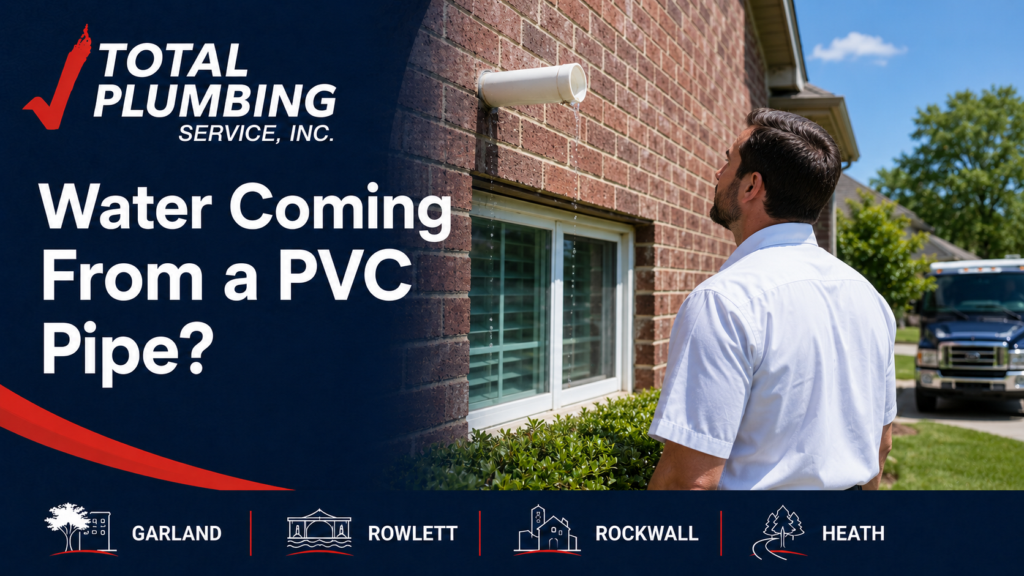
Water Coming From a PVC Pipe Outside Your House? Here’s What It Could Mean
Noticing water dripping from a PVC pipe outside your house can be confusing—especially when you cannot tell where the pipe leads. During a hot North Texas summer, the water may simply be condensation produced by your air-conditioning system. In other cases, it can be an early warning that the primary AC drain is clogged and water is backing up where it should not.
The location of the pipe, the amount of water and when it drips can help you determine whether the drainage is normal or needs professional attention.
One of the most common sources is the air-conditioning condensate drain. As your AC system cools warm, humid air, moisture collects on the evaporator coil. That water flows into a drain pan and is carried away through a condensate drain line, which is commonly made from white PVC.
North Texas air conditioners can produce a significant amount of condensation during hot, humid weather. A steady drip from the system’s designated primary drain may therefore be completely normal while the AC is running.
However, many systems have both a primary and a secondary drain. Water coming from the secondary drain often means the primary line is restricted or clogged.
Primary vs. Secondary AC Drain Lines
Understanding which pipe is dripping is the most important first step.
Primary Condensate Drain
The primary drain carries condensation away during normal AC operation. Depending on the home’s design, it may terminate near the outdoor condenser, connect to an approved plumbing drain or discharge somewhere else near the house.
Water coming from the primary line while the AC is operating is often expected. The amount can change with the temperature, humidity and how long the system has been running.
Secondary or Emergency Drain
The secondary drain provides a backup route if water cannot leave through the primary drain. In many North Texas homes with attic HVAC equipment, the secondary pipe terminates above a window, doorway or another noticeable location.
That placement is intentional. Water dripping overhead is meant to get your attention before the auxiliary drain pan overflows and damages the ceiling.
If a PVC pipe above a window or near the roofline suddenly begins dripping, do not assume it is normal. The primary drain may be clogged, the drain pan may be filling or another component may need attention.
Why AC Condensate Drain Lines Become Clogged
Condensate lines remain damp for long periods, creating conditions where buildup can develop.
Common causes include:
- Algae or biological growth
- Dust and debris from the HVAC system
- Sludge inside the drain line or trap
- An improperly sloped drain
- A blocked or restricted termination point
- A damaged, disconnected or poorly installed pipe
Heavy summer AC use can make an existing restriction more noticeable because the system is producing more condensation.
Signs Your AC Drain Line May Be Clogged
Water from an emergency drain is one warning sign, but it is not the only one. Watch for:
- Water dripping from a PVC pipe above a window or doorway
- Water collecting in the auxiliary drain pan
- Ceiling stains beneath attic HVAC equipment
- Musty or damp odors
- Water around the indoor air handler or furnace
- An AC system that shuts off unexpectedly
- A full drain pan or activated float switch
- Gurgling or slow drainage near the condensate connection
Some systems use a float switch that turns the AC off when water rises too high. If your system stops cooling and you also notice water near the unit, do not repeatedly reset it without finding the cause.
Is a Dripping AC Drain Line an Emergency?
A normal primary condensate drain is generally not an emergency. Water coming from a secondary drain, overflowing pan, ceiling stain or indoor unit should be addressed promptly.
Shut the system off and seek professional help if:
Water is entering the ceiling, wall or living area
The auxiliary drain pan is close to overflowing
The PVC line is broken or disconnected
The system repeatedly shuts off
You cannot confirm whether the water is coming from the primary or secondary drain
Continuing to run the system while water is backing up can lead to damaged drywall, insulation, flooring or HVAC equipment.
Can You Unclog an AC Drain Line Yourself?
Some homeowners attempt to clear an accessible condensate line with a wet/dry vacuum at the exterior termination. This may remove a minor blockage, but it does not correct every cause of poor drainage.
Before attempting any work, turn off the HVAC system and confirm that you have identified the correct pipe. Do not cut into a drain line, open electrical components or climb into an unsafe attic area. Avoid mixing drain-cleaning chemicals, bleach, vinegar or other cleaners. Chemical products can create fumes, damage components or be pushed into an unintended drain connection.
If the blockage returns, the pan contains standing water or the line’s routing is unclear, professional diagnosis is the safer choice. A recurring clog may be related to the line’s slope, trap, venting, termination or installation—not simply debris near the outlet.
Could the Water Be From Something Other Than the AC?
Yes. Not every exterior PVC pipe is an air-conditioning drain. Depending on the home, exterior water could be associated with:
A water-heater temperature and pressure relief discharge
A water-softener or filtration-system drain
A sump or condensate pump
A plumbing fixture or appliance drain
A pool or irrigation component
A leaking water line near the exterior wall
Water coming from a water-heater relief line should not be treated as ordinary condensation. A temperature and pressure relief valve is an important safety device, and repeated discharge needs professional evaluation. Never cap or plug a relief pipe.
If the source is unclear, a licensed professional can trace the pipe before recommending a repair.
How to Help Prevent Condensate Drain Problems
Regular maintenance can reduce the chance of a surprise overflow. Homeowners should:
Replace HVAC filters on the recommended schedule
Keep the area around the indoor equipment clean
Look for standing water during routine filter changes
Check visible drain connections for leaks or damage
Pay attention to new dripping from an emergency drain
Have recurring blockages professionally evaluated
Do not ignore a drain that repeatedly clogs. Clearing the immediate obstruction without correcting the underlying drainage problem can allow the same issue to return.
Should You Call a Plumber Or a HVAC Tech for A condensate line issue?
A plumber may be appropriate when the condensate line connects to the home’s plumbing system, the PVC drain is damaged, the termination is improperly installed or drainage problems involve a shared plumbing connection. An HVAC professional may be needed when the issue originates with the evaporator coil, air handler, equipment pan, float switch or another mechanical component.
If you are unsure, describe where the pipe is located, when it drips and whether water is present near the indoor equipment. Photos can also help the service provider determine which type of technician is most appropriate.
Common AC Condensate and HVAC Emergency Drain line clog questions
Is it normal for an AC drain pipe to drip outside?
Water dripping from the primary condensate drain while the air conditioner is running can be normal. Water from a secondary drain—often positioned above a window or doorway—may indicate that the primary line is clogged.
Why is water dripping from a PVC pipe above my window?
The pipe is likely an AC secondary or emergency condensate drain. It is placed in a noticeable location to warn you that the primary drain may be restricted and the backup pan is collecting water.
Can I use drain cleaner in an AC condensate line?
Do not pour conventional chemical drain cleaner into an AC condensate line. It may damage system components, create hazardous fumes or flow into an unintended plumbing connection.
Who should repair a clogged condensate drain: a plumber or an HVAC technician?
A plumber may address damaged PVC piping or plumbing-system connections. An HVAC technician may be needed for problems involving the coil, air handler, equipment pan or float switch. The correct provider depends on where the issue originates.
Get an Exterior PVC Drain Problem Checked Before It Causes Damage
Water dripping from an exterior PVC pipe may be normal condensation, but its location matters. A low primary drain may simply be doing its job. A secondary drain dripping above a window or doorway is usually a warning that water is not leaving through the normal route.
Total Plumbing Service Inc. has served homeowners throughout the Dallas–Fort Worth Metroplex since 1996. If the problem involves a clogged or damaged condensate drain, an improper plumbing connection or another unidentified water source, our licensed plumbers can inspect the piping, explain what is happening and provide an upfront price before completing any approved work.